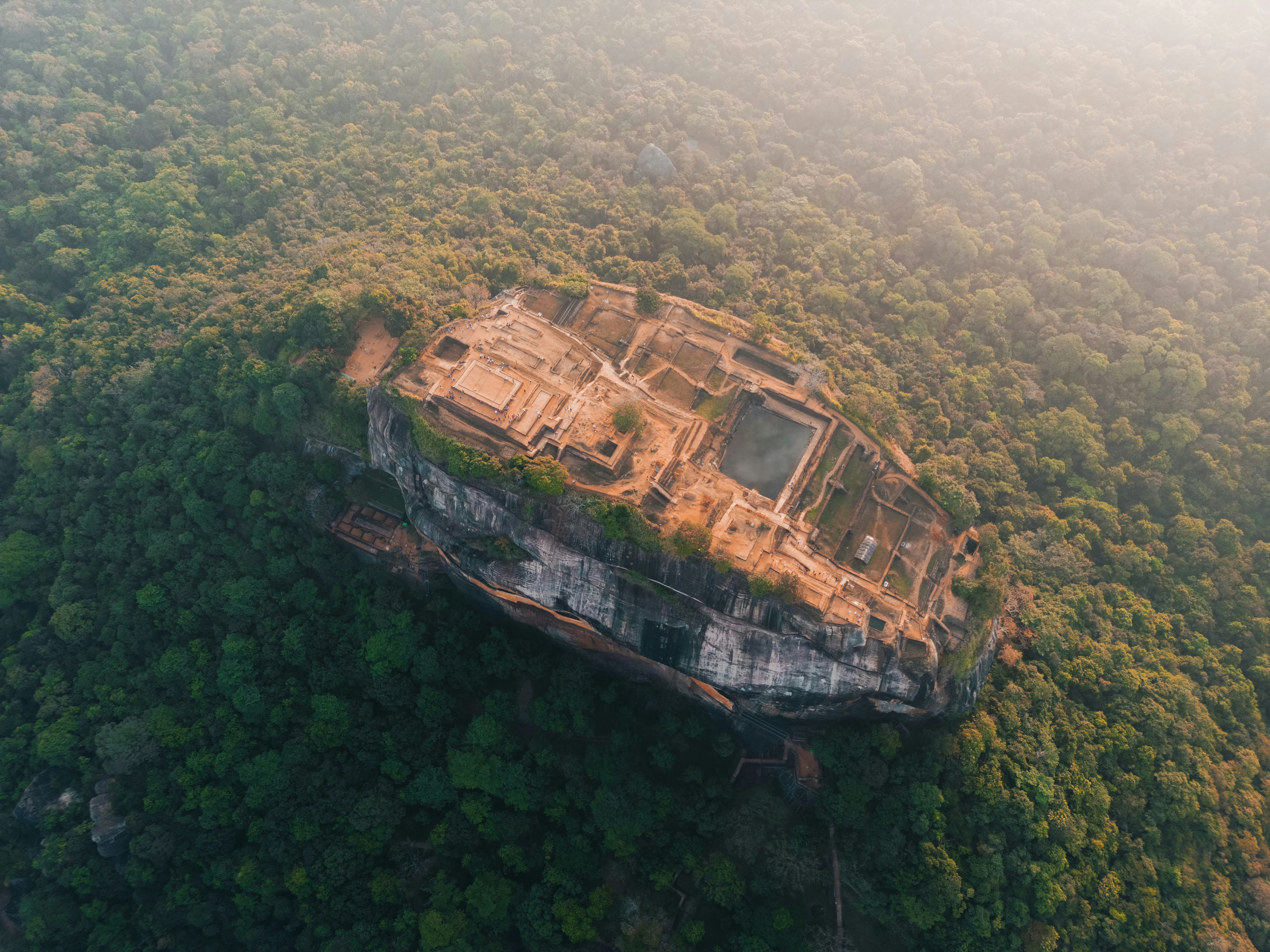
Sigiriya
Sigiriya Rock
A 5th-century royal citadel rising 200 metres from the plain, climbed via stairways past frescoed galleries and the giant lion’s-paw gateway to a ruined palace at the summit.
A 200-metre column of granite rising from the jungle, crowned with the ruins of a 5th-century royal palace. Sigiriya is one of the most striking archaeological sites in Asia.
Built by King Kasyapa in the 5th century, Sigiriya combines a royal citadel, water gardens and frescoed galleries into a single, staggering feat of engineering. The climb to the summit passes through the Mirror Wall and the paws of the giant Lion Gate before opening onto the ruined palace at the top.
Below the rock, the symmetrical water gardens are considered among the best-preserved examples of ancient urban planning in Asia, and the surrounding forest is home to grey langurs, toque macaques and a wide variety of birdlife.
The must-see landmarks and sights that define a visit to Sigiriya.
A 5th-century royal citadel rising 200 metres from the plain, climbed via stairways past frescoed galleries and the giant lion’s-paw gateway to a ruined palace at the summit.

A quieter neighbouring climb with a Buddhist temple at its base, popular at dawn for sunrise views back across to Sigiriya itself.

Sri Lanka’s largest cave-temple complex — five rock shrines packed with painted murals and over 150 Buddha statues, about 20 minutes from Sigiriya.
Plan around 1 day in Sigiriya to make the most of what it has to offer.
Tell us when you’d like to travel and we’ll build Sigiriya into a seamless Sri Lanka itinerary, tailored to you.
Plan My Trip→